PORTFOLIOS

THE SOULS OF INANIMATE THINGS

Do inanimate objects possess a “soul or “spirit”? This question has preoccupied philosophers and theologians for centuries. Figures such as Plato, Spinoza, Leibniz, Schopenhauer, and Bertrand Russell—alongside scholars of animism, Kabbalah, Shinto, and various Indigenous traditions—have all grappled with it. While no definitive answer exists, it’s evident that people often project emotion onto objects through psychological processes like animism, emotional projection, nostalgia, and the attribution of symbolic or spiritual meaning.

In this series, I created ten images that attempt to evoke the “soul” of an object. By layering two perspectives of the same scene, I aimed to reveal the intangible spaces where emotion resides. I then invited a group of creative individuals to spend time with the images and record their responses.

What do you think? Can inanimate things have souls? As you look at these images, what do you notice—and what do you feel?

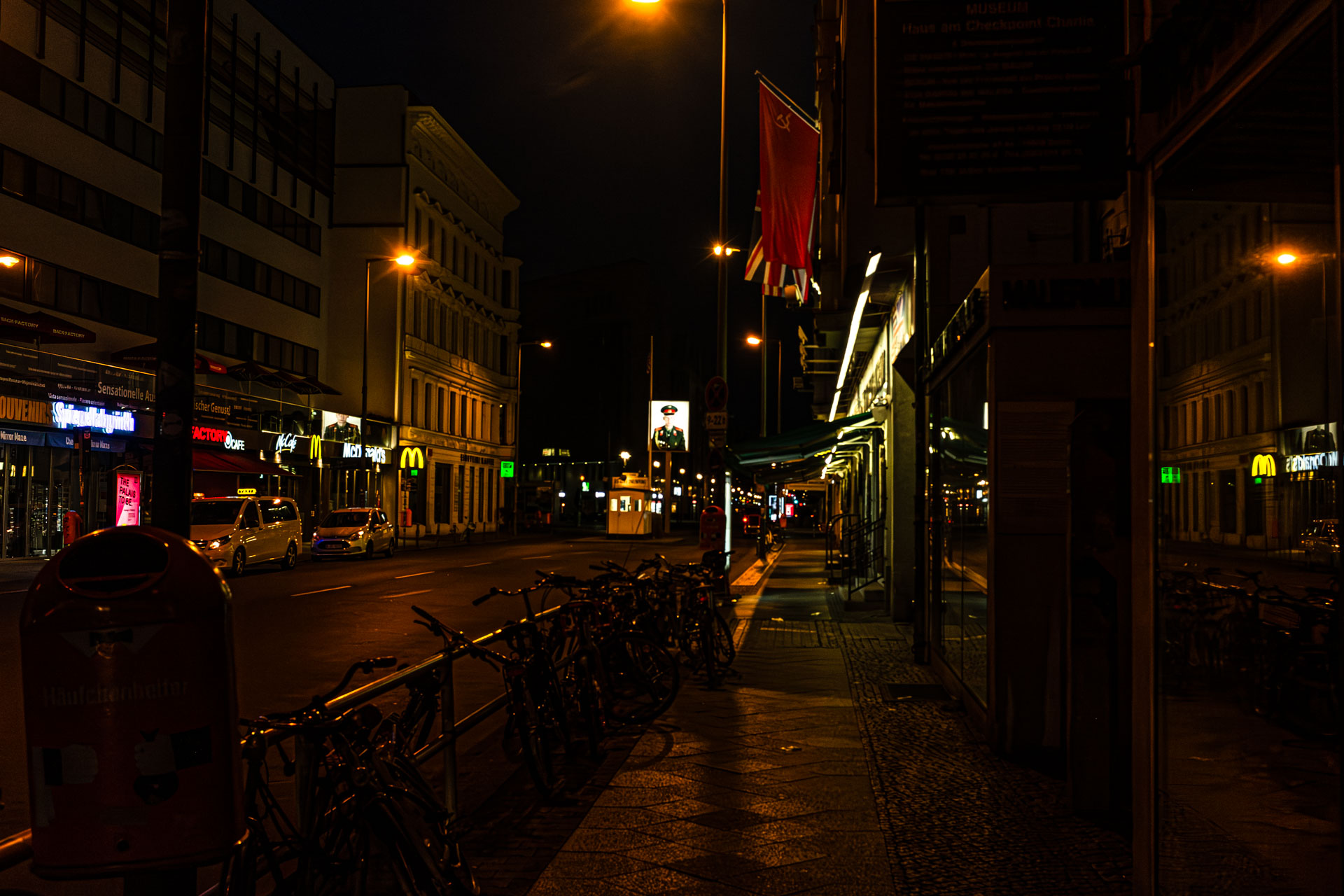
BERLIN BY NIGHT

I first got to Berlin on December 27, 1970, running away from Oklahoma City and into a magical place where I felt at home for the fist time in my young life.  I’ve been going back ever since, both to live and to visit.  During the intervening 56 years I’ve taken a lot of pictures there of the places and people that defined the city for me—first West Berlin, surrounded by a wall, then a reunited city that continues to spread out from its core.  

As a musician, I’ve lived my life in the dark hours between dusk and dawn.  This is the Berlin I know best and the one I love best.  This is the one that evokes the city’s past, where the ghosts of Weimar Berlin still wander the dark streets, inhabiting the bars and floating among the music that fills the in-between hours.  

WINDOWS

People come to art museums for many reasons, most seeking some kind of interaction and experience with the works displayed within. Museums, as keepers of culture, hold a kind of  authority over how we experience art—their curators decide what is shown, who may see it, and how it should be understood. 

But beyond these curated views lies another kind of art—one the museum does not fully control and one that provides a more unfiltered interaction between object and viewer. Through the windows in museums, glimpses of the world outside unfold: city and landscapes, sculptures and gardens. These, too, are framed—but not by artists or curators. Instead, it is the architecture itself, whether intentional or not, that chooses what we see. 

And in this way, the window becomes both a frame and a canvas. It elevates the ordinary, bestowing a nobler, more artistic quality to the outside world. And unlike the stillness of the paintings on the wall, these views are dynamic. There are movements and changes in light and seasons, so that each time you look out a museum window what you see is in a sense unique; it will never be the same no matter how many times you look at it. 

ARTIST STATEMENT

I am a photographer, singer-songwriter, and linguist based in Chicago and Berlin, Germany. Storytelling has shaped my creative work since I first began writing songs, and my photographic practice carries that narrative into visual form. My current work explores themes of urban life, public discourse, the relationship between people and the built environments they inhabit, what I call “the road,” and the roles visual imagery plays in the construction meaning and understanding.

If this work is of interest to you, I would be happy to talk to you about it.  I can be reached at [email protected].